The Forgotten Axis: How Your Gut Microbiome Controls Your Mood, Thyroid, and Period
Have you ever noticed how a period flare or thyroid sluggishness often arrives alongside digestive trouble? Women experiencing mood swings, PMS, brain fog, and irregular cycles are frequently told these symptoms stem from separate issues. Modern medicine often treats the mind, thyroid, and reproductive system as isolated islands. However, ancient wisdom and modern endocrinology both point to a shared root: your gut microbiome. In Ayurveda, this central engine is known as Agni—your metabolic and digestive fire.
Agni and Neurotransmitter Balance
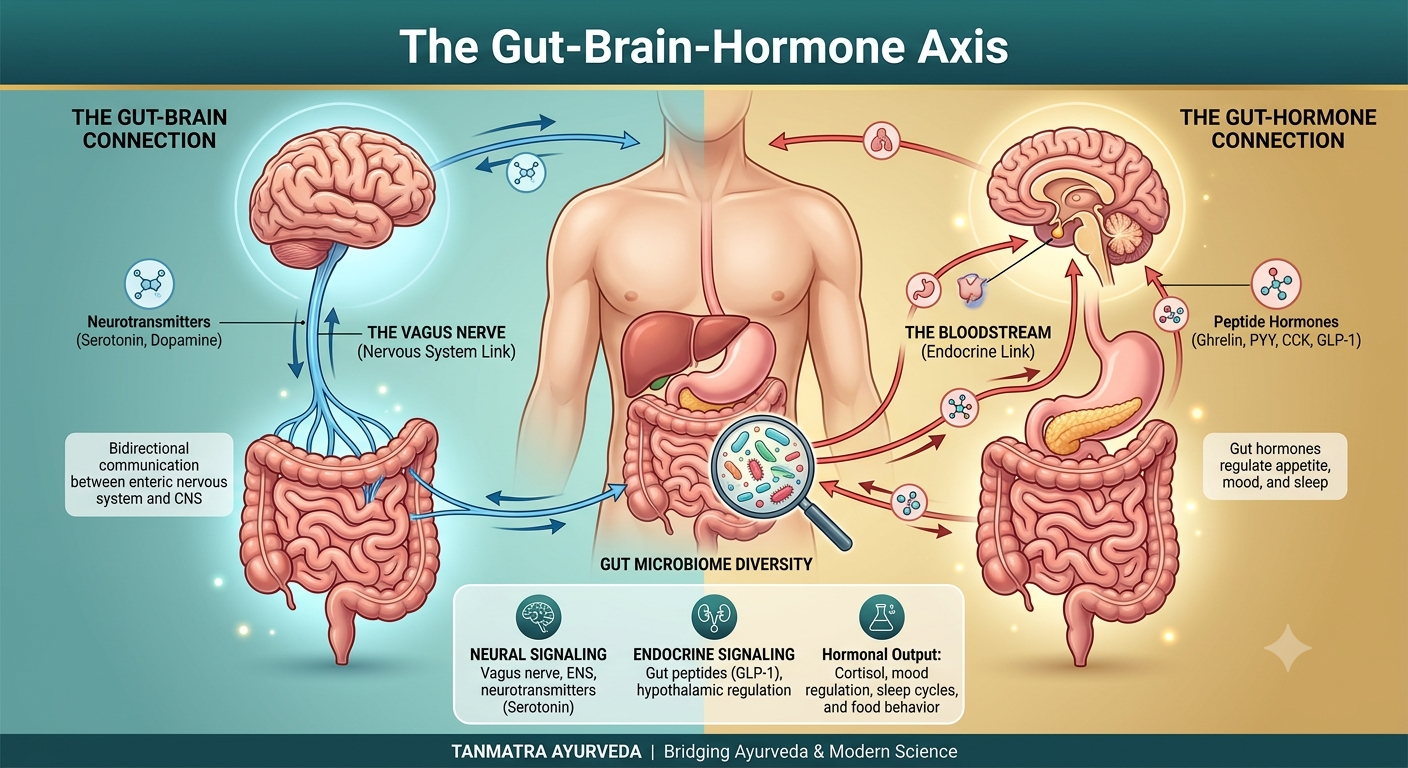
When Agni burns brightly, food breaks down completely into essential bio-nutrients. Your digestive tract houses millions of neurons and synthesizes over ninety percent of your body’s serotonin. When digestive fire is strong, brain fog lifts and emotional stability flourishes naturally. Conversely, weak digestive fire leads to an imbalance in neurotransmitter production. This breakdown leaves you vulnerable to sudden mood shifts, severe anxiety, and persistent mental fatigue before your period.
Ama, Estrogen Clearance, and PCOS
When digestion is impaired, undigested food ferments into a sticky metabolic toxin called Ama. This toxic build-up clogs the micro-channels (Srotas) responsible for systemic waste elimination. Specifically, Ama in the gut blocks normal estrogen clearance through the liver and intestines. Instead of being excreted, excess estrogen recirculates back into the bloodstream. This recirculation drives estrogen dominance, triggering painful PMS, heavy cycles, and classic PCOS symptoms.
Sluggish Digestion and Thyroid Function
Your thyroid gland relies heavily on robust digestive health to perform its vital functions. The thyroid produces T4, an inactive prohormone that must convert into active T3 inside peripheral tissues. A major portion of this crucial conversion occurs directly inside a healthy, balanced gut lining. Sluggish digestion (Manda Agni) slows this enzymatic breakdown, impairing T4 to T3 thyroid hormone conversion. As a result, you experience unexplained fatigue, stubborn weight gain, and cold sensitivity.